
How to Read a Diamond Grading Report
How to understand common report fields, diagrams and verification details without treating a report as a valuation.
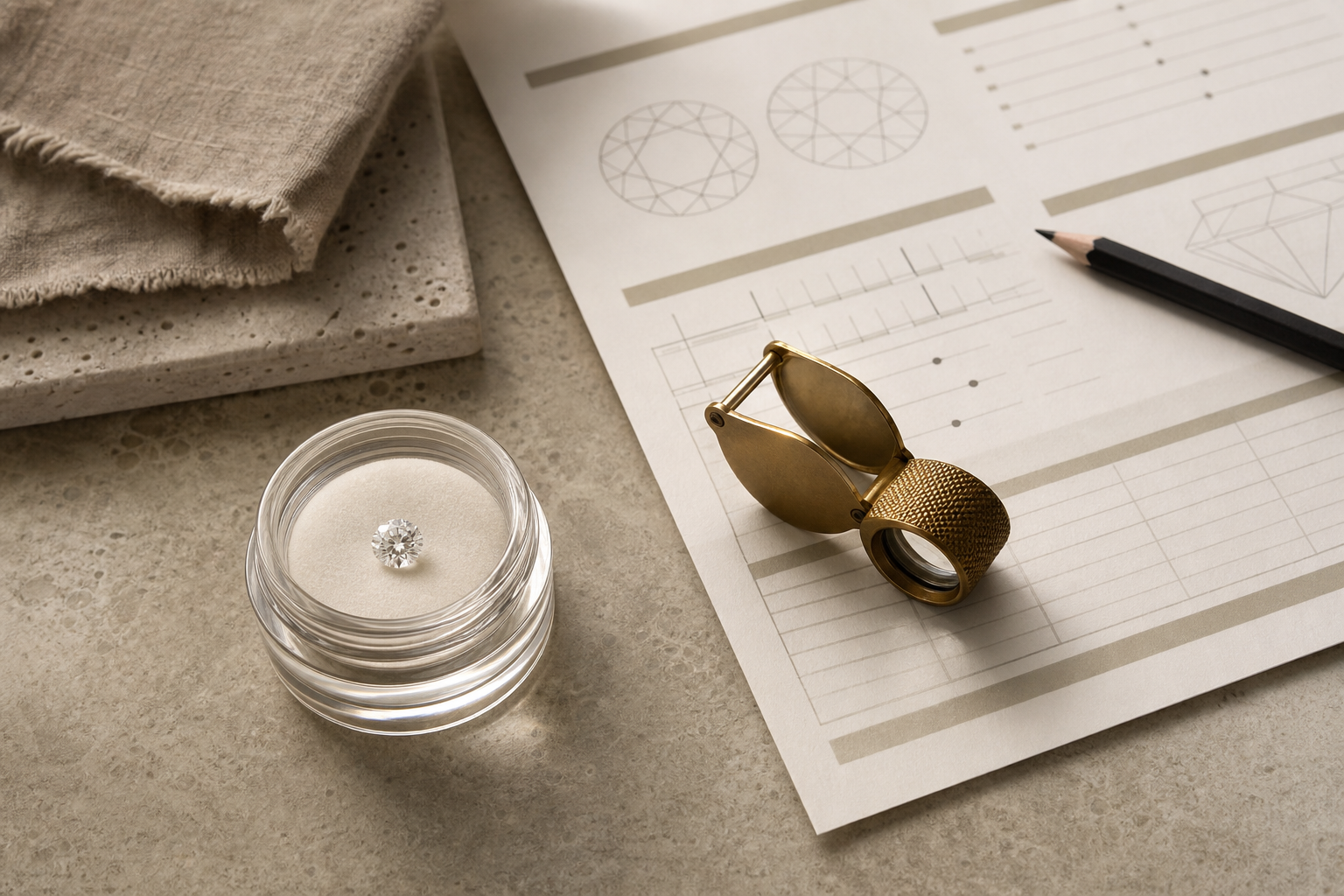
Start with the report identity
Check the report number, issuing laboratory, date and report type. Laboratories and report formats vary, so the information shown on one report may not appear on another.
Where a laser inscription is listed, it may help connect the report to the diamond, but it should still be checked carefully against the stone and report details.
Shape, cutting style and measurements
The shape and cutting style identify the diamond type, such as round brilliant, oval brilliant or emerald cut. Measurements give the physical dimensions and can help explain how large a stone appears face-up.
Carat weight records the stone weight. It should be considered with measurements and proportions rather than used as the only size guide.
Grades and finish
Colour and clarity grades describe assessed characteristics under laboratory conditions. A cut grade may appear for some diamond types, especially round brilliant diamonds.
Polish and symmetry describe finish details. Fluorescence records how the diamond reacts to ultraviolet light, if assessed.
Diagrams and characteristics
A proportions diagram can show depth, table and angle information. A clarity plot, where included, maps identifying characteristics such as inclusions or blemishes.
These details help explain the stone but do not replace viewing the diamond, reviewing images or asking practical questions about appearance.
Verification
Many laboratories provide online report verification. Use the report number and laboratory website to check the report record where available.
A grading report is not a retail, insurance or resale valuation. Pricing depends on market conditions, setting, brand, availability and many other factors.